
Delta County Warrants and Who Issues Them
Warrants in Delta County come from the courts, not from the sheriff. A judge or magistrate signs a warrant after reviewing a sworn complaint or an unresolved matter in an existing case. Most criminal warrants trace back to the 94th District Court, which handles misdemeanors, traffic matters, civil infractions, and the early stages of felony cases. Felony charges can move up to the 47th Circuit Court once a defendant is bound over. The sheriff's office and local police then carry out arrest warrants, yet they do not decide who receives one.
No public database lists these Delta County warrants. A review of the county website and the sheriff's pages turned up no online warrant search, no most-wanted feed, and no downloadable roster of open cases. That absence has a practical purpose, since active-warrant details can compromise a pending arrest and personal safety. Because there is no live feed, the only reliable way to confirm a warrant is to contact the office that would hold it. The sheriff pages tell you where to call and how to visit, but they do not function like a searchable public docket.
Warrant status also changes fast. A warrant can be issued, served, or recalled within days. Any figure a third-party site quotes may already be out of date, which is one more reason to go straight to the source.
It helps to know which office owns each part of the process. The prosecuting attorney reviews complaints and requests charges, a judge or magistrate decides whether probable cause supports a warrant, and the sheriff or a local department carries out the arrest. Several county offices share the same courthouse address, so the building is convenient, but the functions stay distinct. Asking the wrong office wastes a call, while asking the office that actually holds the record gets a faster and clearer answer.
Types of Warrants in Delta County
Not every warrant means the same thing. The label describes why a court issued the order and what it lets police do. Four types come up most often in county cases, and each one starts with a judge.
- Arrest warrant - Authorizes police to take a named person into custody based on probable cause that a crime occurred.
- Bench warrant - Issued by a judge when someone misses a court date or ignores a court order, and it can sit inside an existing case file.
- Search warrant - Lets officers search a specific place or item for evidence, and it belongs to an active investigation rather than a public lookup.
- Capias or failure-to-appear - A court order to bring a person before the judge, often after a missed appearance or an unpaid court obligation.
A single case can produce more than one type. A missed hearing can trigger a bench warrant even when the original charge was minor.
How to Check for Delta County Warrants
With no online roster, checking for a warrant means working the phones and the court counter. Several offices can confirm whether a warrant exists, and the right one depends on the type of warrant you are asking about. Start with the office most likely to hold the record.
The sheriff's office also handles civil process, and its civil-process page shows how deputies serve court paperwork across the county.
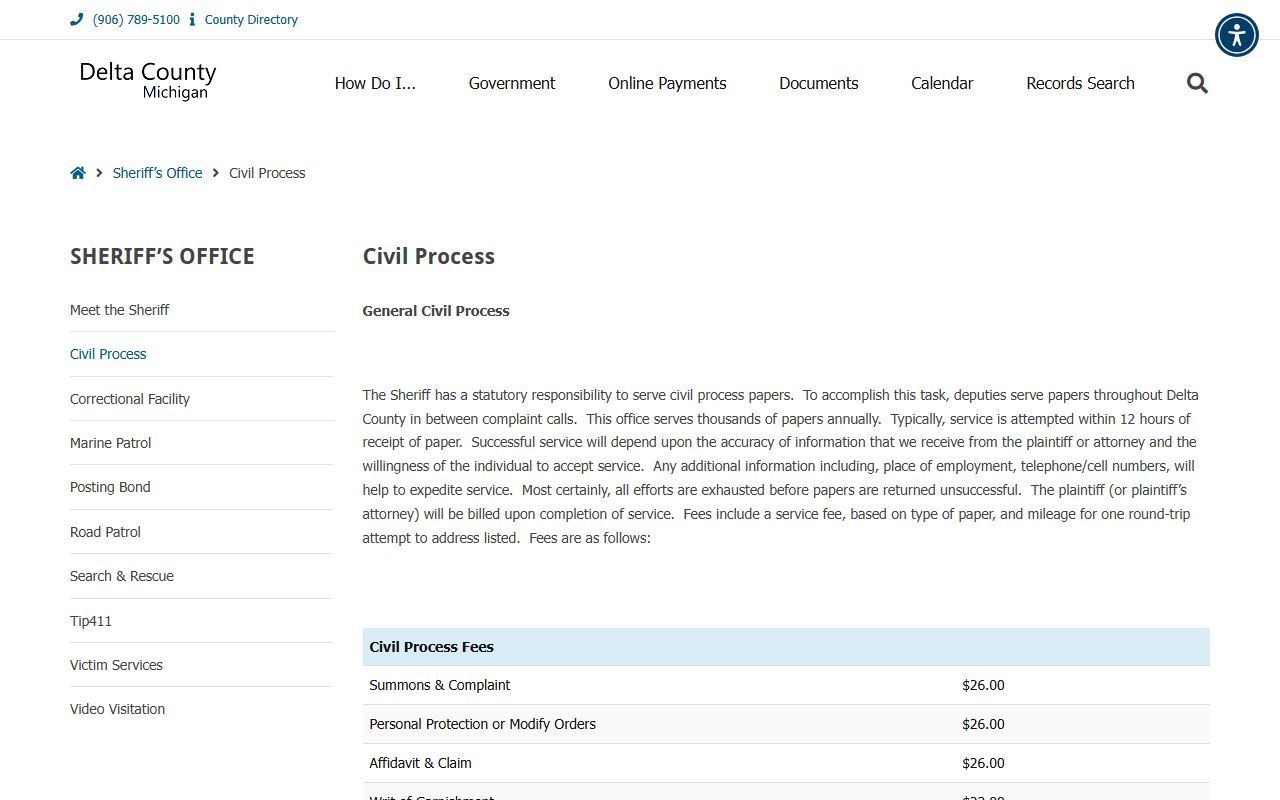
The same office that serves civil papers is the one to call about an outstanding arrest warrant. Use the channels below in order, moving to the next when one cannot answer your question.
- Call the sheriff's main line at (906) 786-3633 to ask about arrest warrants the office may be holding.
- Use the non-emergency dispatch line at (906) 786-5911 for after-hours questions or to confirm a recent officer contact.
- Contact the 94th District Court at (906) 789-5127 to check for a bench warrant tied to a case number.
- File a public-records request with the county when the information is not available over the phone.
Each call is more productive with a full name, a date of birth, and any case number on hand. Staff cannot always share warrant details, but they can point you to the office that can. A family member or an attorney can often make the same calls on a person's behalf, which keeps the person at risk from walking into an office without a plan. If the phones do not resolve the question, the written records request becomes the backstop that puts the ask on the record. Note: warrant confirmation is fastest during regular county business hours, when court and records staff are available to check a file.
OTIS and ICHAT Are Not Warrant Tools
Two statewide systems come up constantly during warrant searches, and both fall short. Neither is a warrant database, and treating them as one leads to wrong conclusions about whether a warrant is open.
The Offender Tracking Information System, known as OTIS, is run by the Michigan Department of Corrections. It tracks people under state supervision, such as prisoners, parolees, and probationers. It does not list county-jail bookings, and it does not publish open warrants. A clean record in OTIS says nothing about whether a district court has signed a bench warrant. That limit is the same reason OTIS does not work as a county roster, a point covered on the Delta County inmate records page.
The Michigan State Police criminal-history page explains what the ICHAT service does and does not cover.
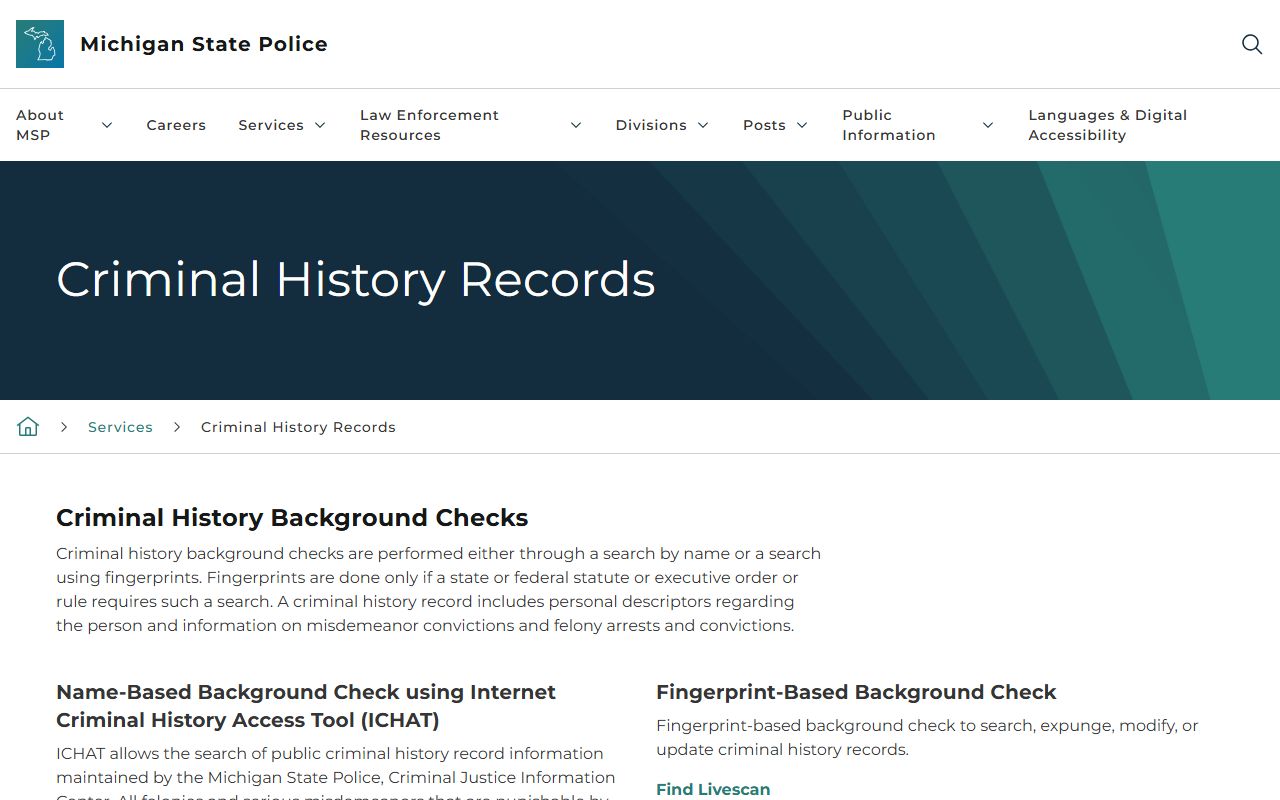
ICHAT returns conviction history for a fee, but the service states plainly that warrant information is not available through it. So a clear ICHAT report is not proof that no warrant exists. For a dependable warrant answer, the county sheriff and the district court remain the only sources that actually hold the record.
What a Delta County Bench Warrant Shows
When a bench warrant exists, its details usually live inside the district court case file rather than in a standalone warrant index. If you can view or request that case file, the warrant entry generally shows a set of standard fields. The table lists what a typical entry contains.
| Field | What It Shows |
|---|---|
| Warrant Number | The tracking number the court assigns to the warrant within the case. |
| Issue Date | The date the judge or magistrate signed the warrant. |
| Charge | The offense or the court obligation that prompted the order. |
| Bond Amount | The dollar figure, if any, set for release after an arrest. |
| Issuing Court | The court that ordered the warrant, usually the 94th District Court. |
A search warrant file looks different. Much of it stays sealed while an investigation is open, so the public entry may show little more than a case label until the matter reaches court.
If You Have an Outstanding Warrant
Ignoring a warrant rarely helps. It stays active until the court recalls it or the person is arrested, which can happen during a traffic stop or any routine contact with police. The safer path is to address it on purpose. An attorney can confirm the warrant, contact the court, and sometimes arrange a hearing or a bond so the arrest is planned rather than sudden. How a related charge is being handled can also matter, and Delta County criminal court records show where the underlying case stands.
Voluntary steps often lead to a calmer resolution than an unexpected arrest. A person who turns up with counsel, a plan, and the case number tends to move through the process faster. Still, the choice carries real stakes, so professional advice comes first.
Important: Talk to a licensed attorney before you turn yourself in on a Delta County warrant, since a lawyer can protect your rights and may arrange bond in advance of any arrest.
Anonymous Tips and the tip411 App
Delta County does run an anonymous tip program, but it is not a warrant tool. The sheriff's tip411 service lets residents send information about crime and suspicious activity through a mobile app or a text message. It moves information into the office rather than out to the public.
The sheriff's tip411 page walks through downloading the app and sending a secure, anonymous tip.
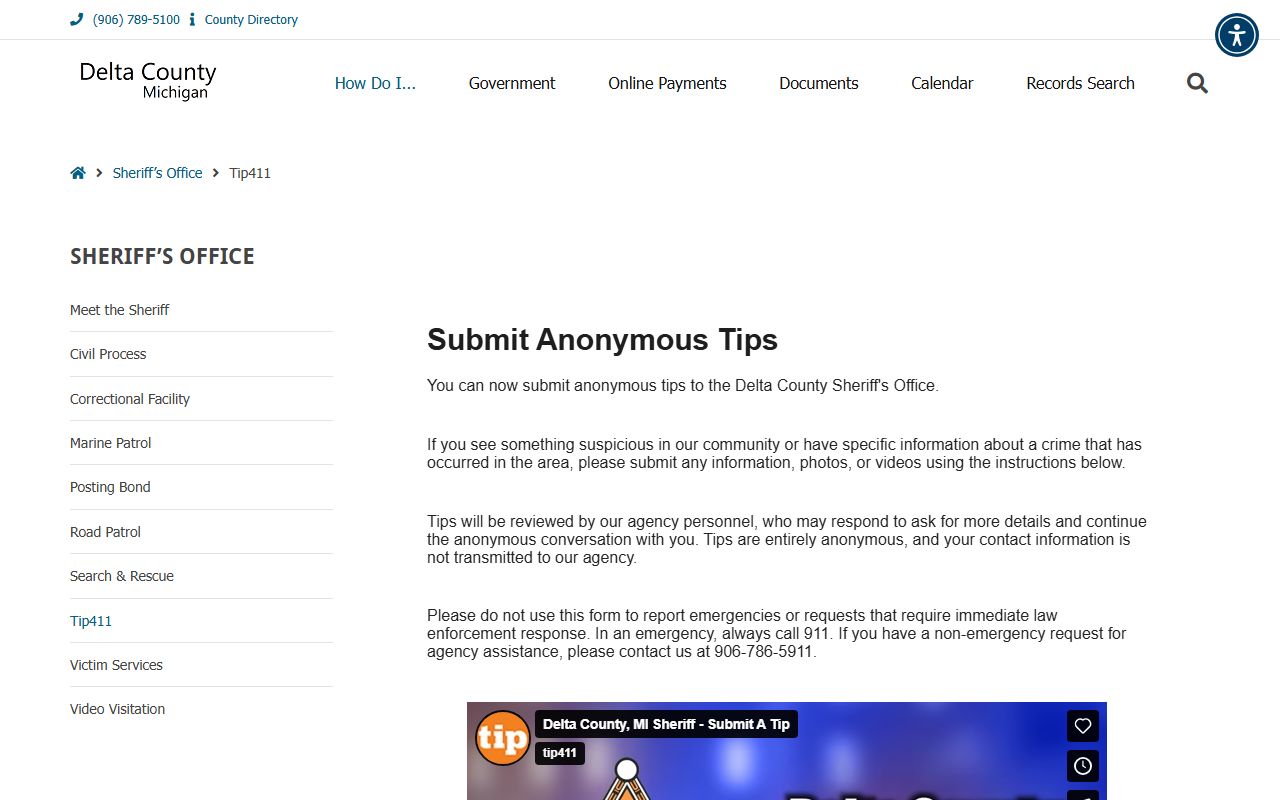
The app only sends tips into the sheriff's office, so it cannot tell a user whether a warrant is open in their name. Confirming a warrant still requires the sheriff or district court channels, not the tip line.
Restricted Delta County Warrant Records
Not every warrant is open to the public. Several categories stay out of reach even when you know exactly where to ask. Search warrants often remain sealed while an investigation continues, so their contents are not released until a case reaches court. Juvenile warrants fall under Michigan law that keeps juvenile records closed except by court order. Federal warrants are a separate system entirely, handled by federal courts and the U.S. Marshals rather than county offices.
Michigan's Freedom of Information Act still governs what the county must release, and it lists exemptions for records that would interfere with law enforcement. When a phone call does not produce an answer, a written FOIA request creates a formal record of the ask. Some material may still come back withheld, but the request forces a documented response and sets the stage for an appeal if needed.
The county publishes a FOIA request form and a public summary of its procedures, so a request does not have to start from a blank page. A clear request names the person, the time frame, and the type of record sought, which helps staff route it to the right office. If the county denies part of a request, the summary explains how to appeal that decision. This route will not turn a sealed warrant into a public one, yet it remains the proper channel for records that are not exposed online.