
Delta County Arrest Records and Court Charges
A Delta County arrest record is the account of an arrest and the booking that follows it. It notes who was taken into custody, which officer or agency made the arrest, the date, and the reason. An arrest by itself decides nothing about guilt. After an arrest, the Delta County Prosecuting Attorney reviews the police report and decides what formal charges to bring. Those charges are filed with the court, where the clerk logs them as the court charge record. The prosecutor, currently Lauren Wickman, controls that charging side. Arrest records and the charges after arrest are two linked but separate parts of the same story.
The two records live in different offices. The arrest and booking side sits with the Delta County Sheriff and the county jail, and the inmate records page covers the jail roster and booking detail. The court charge record covers what the prosecutor filed and how each count moves through the case. Court charges after arrest can shift as evidence comes in, so the charge record is updated over time. The full case file, including pleas, hearings, and the final outcome, is kept by the court clerk. For that complete record and the disposition, the criminal court records page is the better place to start.
How to Find Delta County Arrest Records and Charges
Delta County has no standalone county charge portal. The practical online path is MiCOURT, the statewide case search run by the Michigan courts. It lists civil, criminal, traffic, domestic, and probate cases depending on the court, and a case can show its charges, judge, and next hearing. Arrest and booking detail is not in MiCOURT, since that side belongs to the sheriff. For records that are not online, the county clerk and the district or circuit court counter hold the paper file, and a public records request under Michigan FOIA is the fallback for anything not posted.
- Open the MiCOURT case search and select Delta County where prompted.
- Search by the defendant's last name or by the case number.
- Open the matching case and read the list of charges.
- Check each charge's statute code, severity level, and current status.
For a criminal history rather than a single case, Michigan offers two statewide tools. OTIS, run by the Department of Corrections, shows offense, sentence, and statute data for people under state supervision. ICHAT, run by the Michigan State Police, is the public criminal-history search. Neither one is a Delta County warrant list or a county jail roster.
The OTIS About page explains what each result field means and how to read an offense entry. Its guidance is shown on the OTIS search rules page.
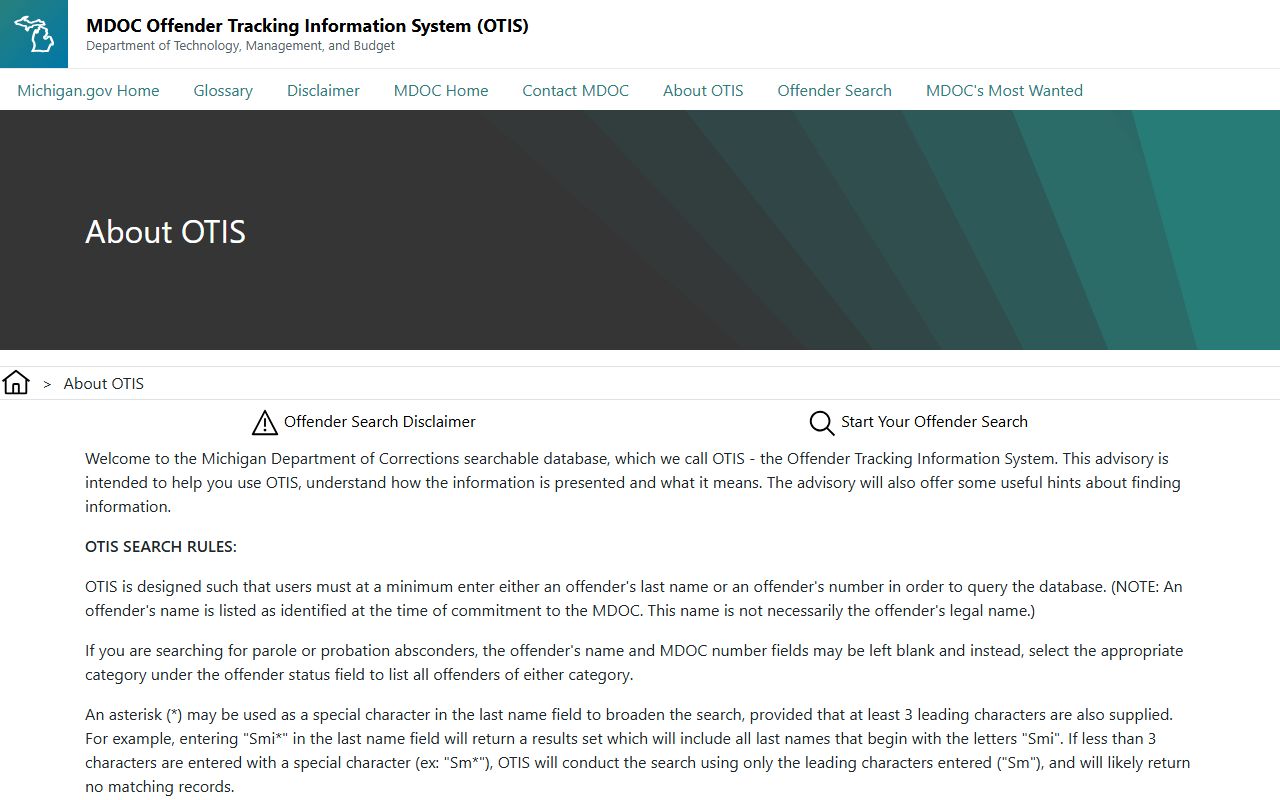
Reading those field notes first makes an OTIS offense entry far easier to match to a Delta County charge record.
How Charges Get Filed After an Arrest: Complaint, Information, and Indictment
An arrest starts the clock, but the court charge record begins when the prosecutor files a charging document. That paper formally accuses a person and names each count. Michigan uses three main forms. A complaint is the common starting point, sworn out by an officer or the prosecutor. An information is filed by the prosecutor and carries many felony cases forward after a preliminary exam. An indictment comes from a grand jury and is reserved for the most serious felonies. Each of these opens the case and fixes the charges the court will track.
| Complaint | Information | Indictment | |
|---|---|---|---|
| Filed By | Officer / Prosecutor | Prosecutor | Grand Jury |
| Common For | Misdemeanors | Many felonies | Serious felonies |
| Starts | The case | The case | The case |
District Court First Appearances and Charges
In Delta County, misdemeanor and felony charges first surface in the 94th District Court. This court handles misdemeanors, traffic, and civil infractions, along with the first appearances and preliminary exams for felonies. At a first appearance, the judge reads the charges, sets or reviews bond, and advises the defendant of their rights. For a felony, the district court holds a preliminary exam to decide whether enough evidence exists to send the case to the 47th Circuit Court. Felony trials and sentencing take place at the circuit level. The charge record follows the case as it moves from one court to the other.
Bond conditions and early hearing dates appear in the charge record from this stage on. Note: a bound-over felony keeps its original district court case number in the caption even after it moves up to circuit court.
Charge Status and What It Means
Charges rarely stay frozen. As a case develops, the prosecutor may amend, reduce, add, or drop counts, and a judge may dismiss them. The status field in the charge record tells you where each count stands right now. Reading it correctly matters. A dismissed count and a pending count mean very different things for the person named.
| Status | What It Means |
|---|---|
| Pending | The charge is filed and the case is still open, with no plea or verdict entered yet. |
| Amended / Reduced | The prosecutor changed the charge, often to a lesser offense or a different statute. |
| Dismissed | The court ended the charge without a conviction, sometimes as part of a plea to other counts. |
| Nolle Prosequi | The prosecutor formally chose not to pursue the charge and dropped it from the case. |
Charges vs. Convictions
Being charged is not the same as being convicted. A charge is an accusation the prosecutor believes it can prove. A conviction is a finding of guilt, entered by a plea or a verdict. Many charges never become convictions. They get reduced, dismissed, or resolved without a guilty finding, and a charge record should always be read with that in mind.
| Charge | Conviction | |
|---|---|---|
| Stage | Accusation | Verdict or plea |
| Burden of Proof | Probable cause | Beyond reasonable doubt |
| Public Record | Yes | Yes |
Sealed vs. Expunged Records
Some Delta County charge records are later shielded from public view. Michigan law lets a person petition to set aside, or expunge, certain convictions under MCL 780.621 and related statutes. A sealed record is hidden from public search but may still be seen in limited ways. An expunged, or set-aside, conviction is treated as if it never happened for most purposes. Not every offense qualifies, and setting a conviction aside does not refund fines or costs already paid.
| Sealed | Expunged | |
|---|---|---|
| Visibility | Hidden from public | Destroyed / treated as never existed |
| Law Enforcement | Limited access | Very limited |
| Eligibility | Limited by statute and court order | Set-aside under MCL 780.621; some offenses excluded |
Charge Codes and Severity Levels
Each charge points to a specific statute. Michigan charges cite an MCL number, the Michigan Compiled Laws section that defines the offense. The code fixes exactly what conduct is alleged. Charges also carry a severity level. A felony is the most serious, punishable by more than a year in state prison. A misdemeanor is lower, with jail time or fines. A civil infraction, common in traffic matters, is not a crime at all. One arrest can produce several separate charges, each with its own code and level.
The Michigan Department of Corrections explains OTIS and its charge data on the MDOC OTIS landing page.
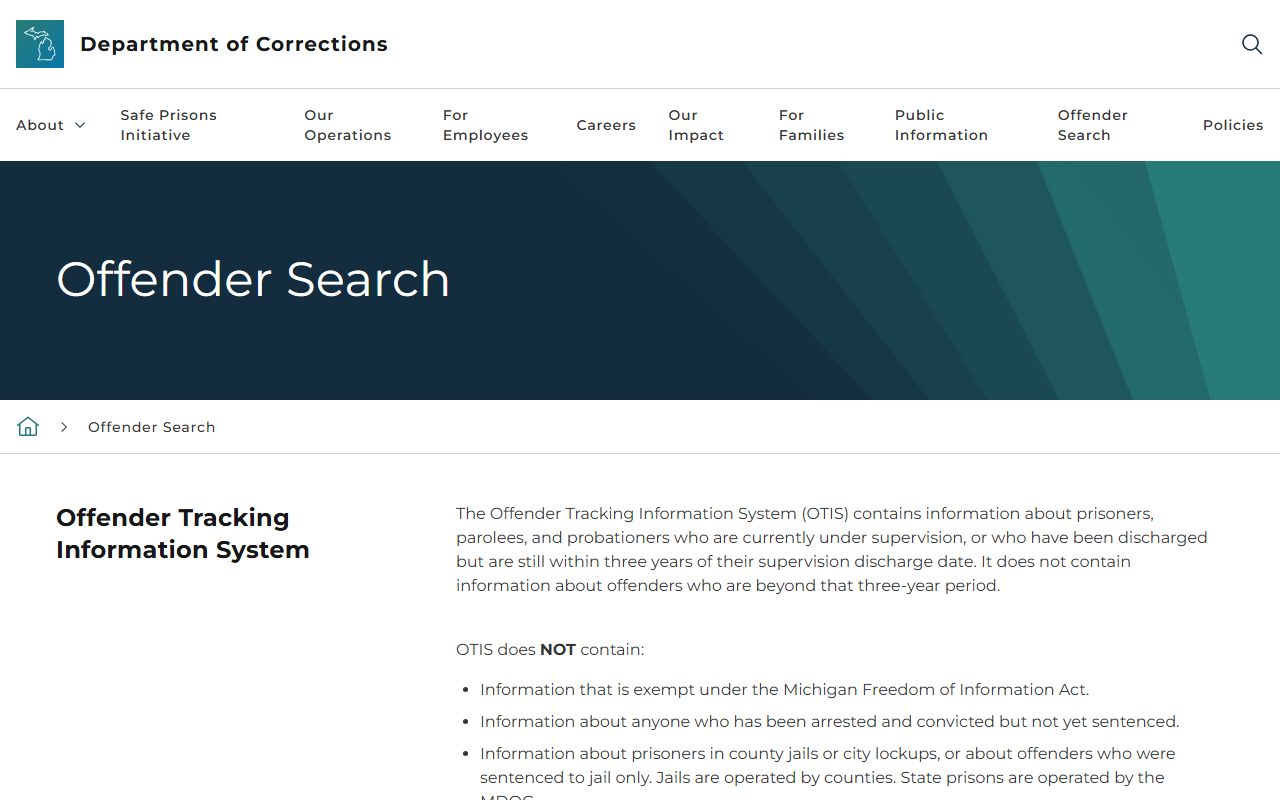
That page also carries the disclaimer that OTIS covers state-supervised offenders, not Delta County jail bookings or arrest logs.
Statewide Charge and Criminal History Lookups
When charges resolve, the data can roll up into statewide systems. OTIS, the Offender Tracking Information System, is run by the Michigan Department of Corrections. It shows the offense, the MCL number, the minimum and maximum sentence, the court file number, and the county for people under state supervision. It does not cover county jail time or people who were never sentenced to state supervision. For a broader public criminal-history check, the Michigan State Police runs ICHAT. Neither tool is a Delta County booking feed.
You can run a name or offender-number query on the OTIS offender search form to view statewide offense and sentence data.
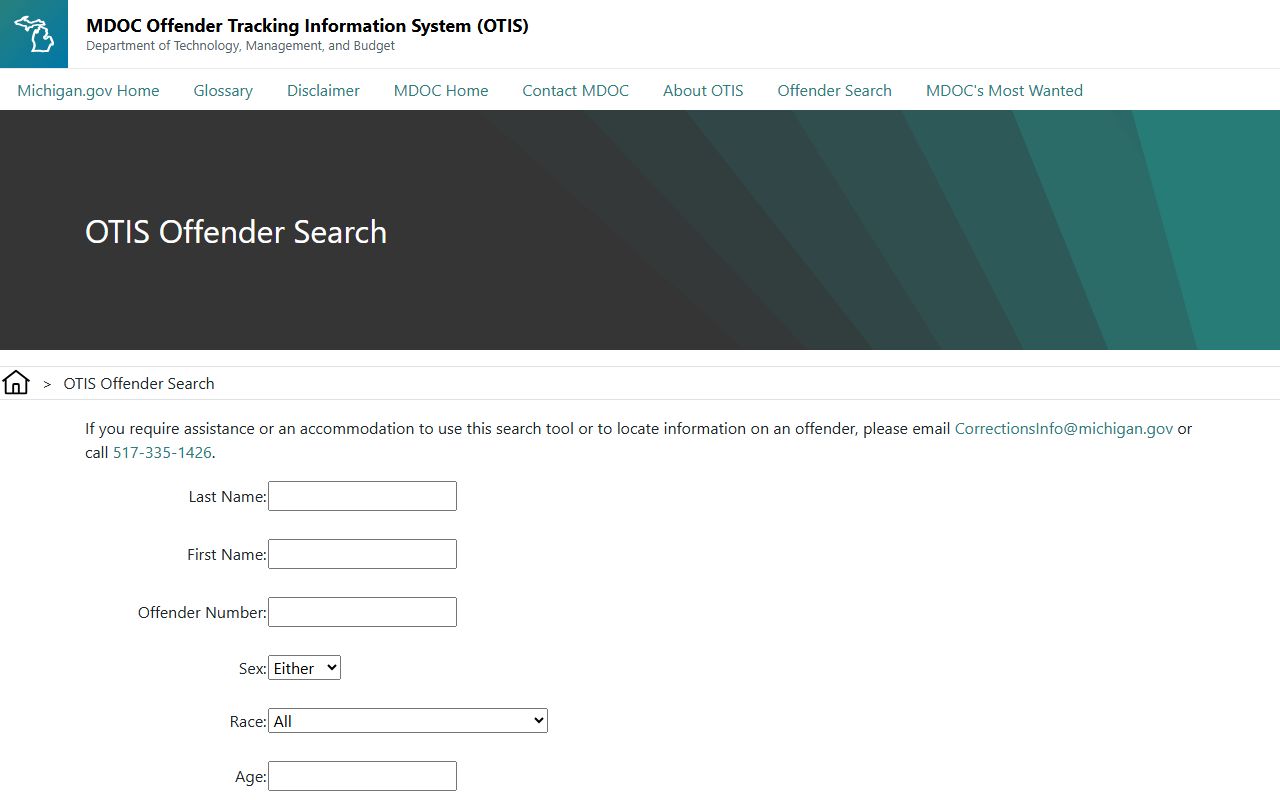
The results tie a charge to its statute and sentence, which helps confirm how a Delta County case ended at the state level.
Traffic Charges vs Criminal Charges
Not every charge after a stop is a crime. In Delta County, the 94th District Court handles traffic, civil infractions, and non-traffic civil infractions alongside misdemeanors. A civil infraction, such as a speeding ticket, is not criminal. It carries a fine and points but no jail. A misdemeanor or felony charge is criminal and can carry jail or prison time. The two produce different records.
A traffic case record shows the citation, the plea option chosen, the disposition, the fine, and any points. The state driver record kept by the Secretary of State is separate and tracks license status, point history, and suspensions. A citation can affect both, but they are not the same file. For the criminal side, the charge record follows the same complaint, status, and disposition path as any other misdemeanor or felony.
Background Check Considerations
People search charge records for many reasons, from checking a tenant to vetting a caregiver. How the record may be used depends on the law. A casual name lookup on a public portal is fine for personal knowledge. A formal background check used for hiring, housing, credit, or insurance is regulated by the federal Fair Credit Reporting Act. That kind of report must come from a compliant consumer reporting agency and follow strict accuracy and notice rules.
Important: This website is not a consumer reporting agency under the Fair Credit Reporting Act, and its content may not be used for employment, tenant, credit, or insurance screening.
Restricted Charge Records in Delta County
Some Delta County charge records stay out of public view by law. Juvenile charges are open only by court order under Michigan law. Sealed and set-aside convictions are removed from public search. Protected personal details, including date of birth, Social Security number, and driver's license number, are redacted from public court filings. Charges tied to an open investigation may also be withheld until the case is formally filed.
When a charge record is not online, there is a clear order to work through. Start with the county clerk or the district or circuit court that holds the case file. For arrest and booking questions, contact the Delta County Sheriff. If the record still is not released, file a public records request under Michigan FOIA. For a criminal-history summary rather than one case, fall back to OTIS and ICHAT at the state level.